• Home
  • About
    • The Challenge
    • Origin Story
    • Photo Gallery
  • 14 Base Camps
    • Map
    • 1, Mt Everest
    • 2, K2
    • 3. Kanchenjunga
    • 4. Lhotse
    • 5. Makalu
    • 6. Cho Oyu
    • 7. Dhaulagiri
    • 8. Manaslu
    • 9. Nanga Parbat
    • 10. Annapurna I
    • 11. Gasherbrum I
    • 12. Broad Peak
    • 13. Gasherbrum II
    • 14. Shishapangma
  • Resources
    • Planning Tips
    • Gear List
    • Great Books
  • Certificate
    • Request
    • Public Registry
    • FAQs
  • Store
    • T-Shirts
    • Mugs
    • Flags
    • Patches
  • Contact
  • More
    • Home
    • About
      • The Challenge
      • Origin Story
      • Photo Gallery
    • 14 Base Camps
      • Map
      • 1, Mt Everest
      • 2, K2
      • 3. Kanchenjunga
      • 4. Lhotse
      • 5. Makalu
      • 6. Cho Oyu
      • 7. Dhaulagiri
      • 8. Manaslu
      • 9. Nanga Parbat
      • 10. Annapurna I
      • 11. Gasherbrum I
      • 12. Broad Peak
      • 13. Gasherbrum II
      • 14. Shishapangma
    • Resources
      • Planning Tips
      • Gear List
      • Great Books
    • Certificate
      • Request
      • Public Registry
      • FAQs
    • Store
      • T-Shirts
      • Mugs
      • Flags
      • Patches
    • Contact
  • Home
  • About
    • The Challenge
    • Origin Story
    • Photo Gallery
  • 14 Base Camps
    • Map
    • 1, Mt Everest
    • 2, K2
    • 3. Kanchenjunga
    • 4. Lhotse
    • 5. Makalu
    • 6. Cho Oyu
    • 7. Dhaulagiri
    • 8. Manaslu
    • 9. Nanga Parbat
    • 10. Annapurna I
    • 11. Gasherbrum I
    • 12. Broad Peak
    • 13. Gasherbrum II
    • 14. Shishapangma
  • Resources
    • Planning Tips
    • Gear List
    • Great Books
  • Certificate
    • Request
    • Public Registry
    • FAQs
  • Store
    • T-Shirts
    • Mugs
    • Flags
    • Patches
  • Contact

9. Nanga Parbat Base Camp Trek (Pakistan)

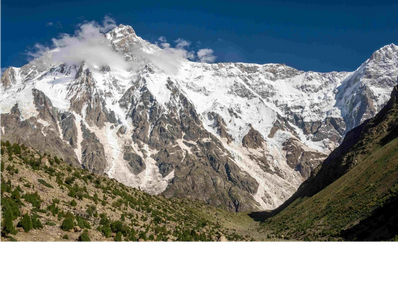
Snow-capped mountain peak under a bright blue sky.

Trek Overview

Nanga Parbat in Pakistan's Gilgit-Baltistan region, known to mountaineers as the “Killer Mountain,” is the world’s ninth-highest peak. The mountain has three main base camps that correspond to its three distinct faces—Diamer (west side), Rakhiot (north side), and Rupal (south side). The most popular trekking route is to the Rakhiot Base Camp via Fairy Meadows from where it can be reached in a single day's hike.


Photo credit: Muhammad Ashar (Wikipedia)

Key Information

  • Summit Elevation: 8,126 m (26,660 ft).
  • Base Camp Elevation: (~4,000 m) 
  • Highest Trekking Point: Nanga Parbat BC (Rakhiot) 
  • Duration: ~3-5 days.
  • Difficulty Rating: Moderate.
  • Best Season: June-September
  • Starting Point: Tato village, Pakistan. 
  • Total trekking distance (return): ~ 30-40 km

Trek Highlights

  • Traverse Fairy Meadows, a mix of beautiful alpine meadows and forests.
  • See Nanga Parbat's dramatic north face from Rakhiot Base Camp.
  • Experience Shina hospitality and culture, the main ethnic group around Nanga Parbat.

What to Expect

The journey begins with a jeep ride on the Karakoram Highway from Raikot Bridge to Tato village, followed by a steep forested trek up to Fairy Meadows.  Many people stay overnight at Fairy Meadows and trek to Rakhiot Base Camp and back the next day.  Between Tato village and the base camp, the elevation gain is over 1,000 m.

Example 7-Day Itinerary (start/end Islamabad, Pakistan)

  • Day 1: Drive Islamabad (~666 m) →  Chilas (~1,265 m). 
  • Day 2: Drive Chilas → Raikot Bridge →Tato (~2,700 m) → Trek  to Fairy Meadows (~3,300 m). 
  • Day 3: Fairy Meadows - acclimatization day.
  • Day 4: Fairy Meadows →  Beyal (~3,500 m) → Nanga Parbat - Rakhiot BC (~4,000 m) → Beyal 
  • Day 5: Beyal →  Fairy Meadows (~3,300 m). 
  • Day 6: Beyal → Tato  → Drive Raikot Bridge → Chilas (~1,265 m). 
  • Day 7: Drive Chilas → Islamabad (~666 m).

Back to Map

Nanga Parbat from the air

Copyright © 2026 8K Base Camp Challenge